If you have ever blown out a keyboard, a camera sensor, or the inside of a PC case, you have used the idea behind an air duster. This guide explains what these devices actually are, how they work, and what to look for before you buy or import them in volume.
What Is an Air Duster?
An air duster (also called a compressed air duster, electric duster, or computer dust blower) is a handheld device that shoots a focused stream of air to dislodge dust and debris from surfaces you cannot easily reach with a cloth.
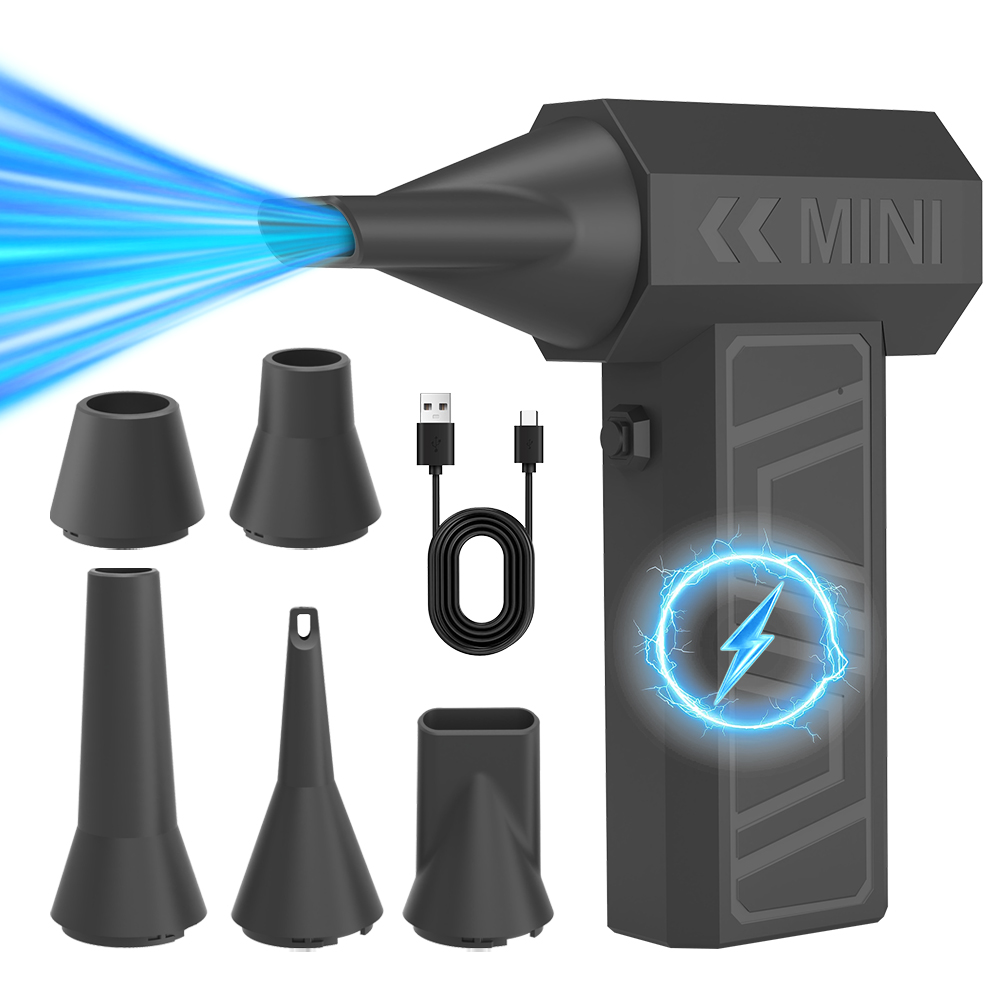
The classic version is a canned spray of compressed gas. The modern version — and the one most B2B buyers now source — is a rechargeable, cordless electric air duster with a brushless motor. Instead of a disposable can, it uses a fan and battery to generate continuous, high-velocity airflow.
How Does an Electric Air Duster Work?
Inside a quality unit you will find three core parts:
- A brushless DC motor that spins at very high RPM (premium models reach 110,000 RPM).
- A battery pack (commonly 4000mAh) that powers the motor for 15–60 minutes depending on the speed setting.
- A set of nozzles that shape the airflow for different jobs — a wide tip for surfaces, a narrow tip for crevices, and brush attachments for stubborn dust.
Because there is no chemical propellant, an electric duster can be used again and again. That is the single biggest reason businesses are switching away from canned air.
Canned Air vs Electric Air Duster
Canned air is convenient for a one-off job, but it has real downsides at scale:
- It runs out, and replacement cost adds up fast across a workshop or service center.
- The propellant gets cold and can spray moisture or frost onto sensitive electronics.
- Disposal creates waste, and shipping pressurized cans is restricted in many markets.
An electric alternative like the MONIX X3S Air Duster delivers comparable — often stronger — airflow (up to 41 m/s) with no recurring consumable. For any team cleaning dozens of devices a week, the math favors the cordless unit.
Key Specs That Actually Matter
When you compare models on the products page, focus on these numbers:
- Max RPM and airflow — higher RPM generally means stronger, steadier blowing power.
- Battery capacity — 4000mAh is a good baseline for a full work session.
- Charging — USB-C fast charging keeps downtime short.
- Nozzle kit — a 5-in-1 kit covers most real-world tasks.
- Safety protections — over-temperature (75°C) and over-voltage cutoffs protect the motor and the device you are cleaning.
Where Air Dusters Are Used
These tools show up in far more places than the office desk:
- Electronics & PC maintenance — keyboards, fans, heatsinks, camera gear.
- Automotive — dashboards, vents, and interior detailing.
- Home & pet care — blowing dust off blinds, sofas, and drying small areas.
- Inflating — pool toys, air mattresses, and sports equipment with the right nozzle.
Why Source From a Manufacturer Directly
If you are specifying air dusters for resale or integration, buying from a factory like MONIX changes the equation: you get consistent quality, certification for your target markets (CE, FCC, RoHS, UKCA, KC), and the ability to customize branding and packaging through OEM/ODM.
Bottom Line
An air duster is a simple concept done well: focused airflow, no mess, no consumable. For personal use, any reputable electric model will do. For business use, the smarter move is to source directly from a certified manufacturer and standardize on one reliable SKU.
Ready to spec one out? Talk to our team about OEM/ODM options for the X3S platform.